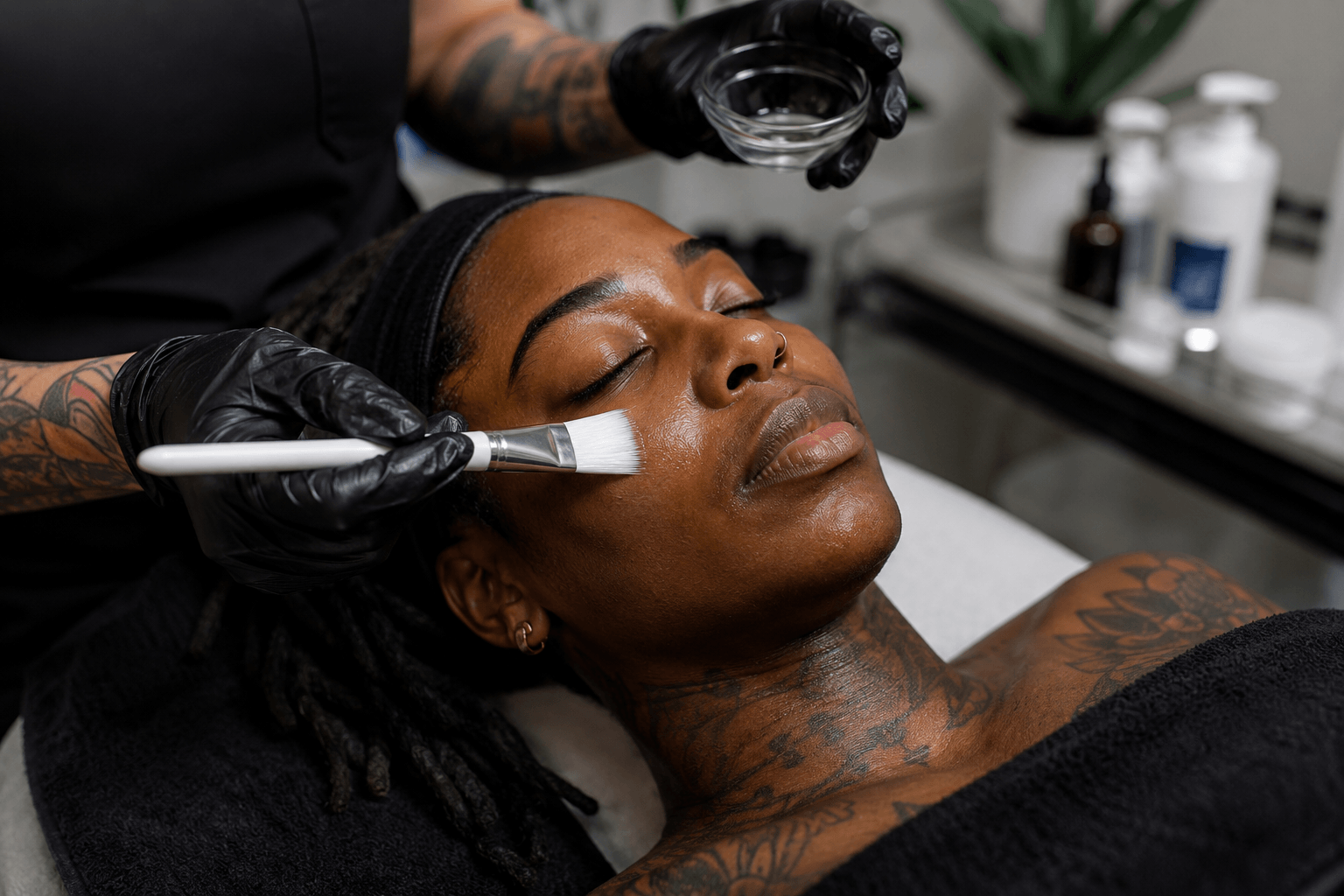
Best Chemical Peels for Hyperpigmentation in Dark Skin in Atlanta, GA
Updated May 2026
Hyperpigmentation can feel especially frustrating when you have melanin-rich skin. Dark spots tend to linger longer, react more easily to irritation, and often return if not treated properly. The good news is that modern chemical peel treatments have evolved significantly, making them safer and more effective for darker skin tones than ever before.
If you’re searching for a real solution in Atlanta, GA, understanding which chemical peels work and which ones to avoid is key. This guide breaks it all down in a way that actually makes sense for your skin.
What Causes Hyperpigmentation in Darker Skin Tones?
Hyperpigmentation happens when your skin produces excess melanin in response to inflammation or injury. While this can affect all skin types, it’s more noticeable and persistent in darker skin tones.
Common triggers include:
- Acne and breakouts
- Ingrown hairs, especially after shaving or waxing
- Hormonal conditions like PCOS (PMOS)
- Skin conditions such as hidradenitis suppurativa
- Sun exposure without proper protection
- Irritation from harsh skincare products
For many people, even minor inflammation can leave behind dark spots that take months to fade. That’s why treatment needs to be both effective and gentle.
Can Chemical Peels Safely Treat Hyperpigmentation in Melanin-Rich Skin?
Yes, chemical peels can safely treat hyperpigmentation in darker skin, but only when done correctly.
The biggest concern with darker skin is post-inflammatory hyperpigmentation, or PIH. This happens when the skin becomes irritated and responds by producing even more pigment. Aggressive treatments or poorly chosen peels can make discoloration worse instead of better.
That’s why professional guidance matters. A properly selected chemical peel will:
- Gently exfoliate without triggering inflammation
- Target pigment at the right depth
- Improve skin tone gradually and evenly
- Support overall skin health instead of stripping it
When done right, chemical peels can significantly improve uneven skin tone without compromising your skin barrier.
Which Chemical Peel Is Safest for Dark Skin?
Not all peels are created equal, especially for Fitzpatrick skin types IV to VI.
For darker skin tones, the safest chemical peels are typically:
Superficial to Medium-Depth Peels
These work at the surface level and avoid penetrating too deeply, reducing the risk of irritation.
Formulations Designed for Melanin-Rich Skin
Blended Acid Peels
Rather than relying on a single strong acid, blended peels use a combination of ingredients to deliver results more gently.
At Skin So Bare Laser Center in Atlanta, VI Chemical Peels are a popular option because they are designed to improve tone, texture, and clarity without causing unnecessary trauma to the skin.
Can VI Peels Help with Post-Inflammatory Hyperpigmentation?
Yes, VI Chemical Peels are often recommended for post-inflammatory hyperpigmentation, especially in darker skin.
These peels work by:
- Breaking up excess pigment in the skin
- Encouraging faster cell turnover
- Improving overall skin clarity and brightness
- Reducing the appearance of acne scars and discoloration
They are commonly used for clients dealing with:
- Acne-related dark spots
- Hormonal pigmentation linked to PCOS
- Discoloration from conditions like hidradenitis suppurativa
- Uneven tone from past irritation or inflammation
Because they are formulated with a blend of acids and supportive ingredients, they offer visible results without the harsh side effects associated with deeper peels.
What Ingredients Should People with Darker Skin Avoid in Chemical Peels?
When it comes to darker skin, the goal is controlled exfoliation, not aggressive resurfacing.
Ingredients or approaches to be cautious with include:
- High-strength TCA peels without proper supervision
- Deep phenol peels
- Overly aggressive glycolic acid concentrations
- Unregulated at-home peel kits
These can increase the risk of irritation and lead to more hyperpigmentation instead of less.
Instead, safer formulations often include balanced blends of:
- TCA in controlled, lower concentrations
- Salicylic acid for acne-prone skin
- Retinoic acid for cell turnover
- Brightening agents that support even tone
The key is customization. What works for one person may not work for another, especially when underlying conditions like HS or hormonal imbalances are involved.
How Many Chemical Peel Sessions Are Needed for Discoloration?
Hyperpigmentation doesn’t disappear overnight, and expecting it to can lead to disappointment.
Most people will need a series of treatments for best results.
Typical expectations:
- 3 to 6 sessions spaced a few weeks apart
- Gradual improvement with each peel
- Continued progress with proper skincare at home
Consistency is what makes the difference. A single peel can brighten the skin, but a series is what truly transforms uneven tone.
What Should You Expect After a Chemical Peel for Hyperpigmentation?
After a chemical peel, your skin will go through a short renewal process.
Here’s what that usually looks like:
Days 1–2
Skin may feel tight and slightly darker as the peel begins working.
Days 3–5
Peeling starts. This is where damaged, pigmented skin sheds.
Days 6–7
Fresh, brighter skin appears underneath.
It’s important not to pick or peel the skin manually. Letting the process happen naturally reduces the risk of irritation and further pigmentation.
Sun protection is also critical during this time. Your skin will be more sensitive, and UV exposure can undo your results quickly.
Where Can You Get Safe Chemical Peels for Dark Skin in Atlanta, GA?
Finding the right provider is just as important as choosing the right peel.
At Skin So Bare Laser Center in Atlanta, GA, treatments are tailored specifically for diverse skin types and real-world concerns. The focus is on creating a space where all clients feel comfortable, seen, and respected, including those with darker skin tones, transgender clients, and individuals dealing with complex skin conditions.
The approach goes beyond surface-level treatments. It considers:
- Your skin type and history
- Underlying conditions like PCOS or HS
- Lifestyle factors and skincare habits
- Long-term skin health goals
This level of personalization is what helps ensure both safety and results.
Representation Matters: Skin Care That Reflects Real People
Skincare is personal, and so is the environment where you receive it.
More clinics are moving away from the overly polished, unrealistic aesthetic and toward something more authentic. That means welcoming clients with tattoos, piercings, diverse identities, and unique skin journeys.
For many people, especially those in the trans community or those who have felt overlooked in traditional skincare spaces, this shift matters just as much as the treatment itself.
Feeling comfortable in your skin starts with feeling comfortable where you go for care.
FAQs
Is chemical peel safe for Black skin?
Yes, chemical peels can be safe for Black skin when the right type of peel is used and performed by an experienced provider. Gentle, targeted peels are key to avoiding further pigmentation.
What is the best peel for dark skin hyperpigmentation?
Blended peels like VI Chemical Peels are often considered one of the best options because they are designed to treat discoloration without causing excessive irritation.
Can chemical peels help with acne and dark spots at the same time?
Yes, many chemical peels target both acne and post-acne pigmentation, making them a great option for improving overall skin clarity.
Are chemical peels safe for people with PCOS-related pigmentation?
They can be, especially when hormonal pigmentation is paired with a consistent treatment plan. A consultation helps determine the safest and most effective approach.
Can people with hidradenitis suppurativa get chemical peels?
In some cases, yes, but treatment must be approached carefully. Active areas are typically avoided, and the focus is placed on safe areas with pigmentation.
How do I maintain results after a chemical peel?
Using sunscreen daily, following a gentle skincare routine, and maintaining your treatment plan are essential for keeping your results long-term.
Glow Different, Not Perfect
Perfect skin isn’t the goal. Healthy, confident skin is.
Hyperpigmentation in darker skin tones deserves thoughtful treatment, not one-size-fits-all solutions. With the right chemical peel, the right provider, and a plan built around your skin, real progress is absolutely possible.
And in a city like Atlanta, GA, you don’t have to settle for anything less than care that actually understands you.