Can Laser Skin Resurfacing Help Fade PCOS-Related Hyperpigmentation?
Updated June 2026
Dealing with stubborn dark spots can feel frustrating, especially when they seem to come back no matter what skincare routine you follow. For many women with PCOS, hyperpigmentation is not just a cosmetic concern. It is often tied to deeper hormonal imbalances that affect the skin in persistent ways.
This is where laser skin resurfacing has started gaining attention. Not as a quick fix, but as a targeted approach that works beneath the surface of the skin. If you are exploring options in Atlanta, GA, especially around Midtown or Old Fourth Ward, understanding how this treatment works and whether it fits your needs is the first step toward clearer, more even skin.
Why Does PCOS Cause Dark Spots and Uneven Skin Tone?
Polycystic ovary syndrome, commonly known as PCOS, affects hormone levels in ways that can directly impact the skin. One of the most common skin concerns linked to PCOS is hyperpigmentation, which often appears as dark patches or uneven tone.
This happens for a few key reasons:
- Insulin resistance can increase melanin production, leading to darker patches
- Hormonal fluctuations may trigger inflammation, which worsens pigmentation
- Friction-prone areas like the neck, underarms, and inner thighs are more likely to develop discoloration
For individuals with darker skin tones, these effects can be even more noticeable. Melanin-rich skin tends to respond more strongly to inflammation, which can result in longer-lasting discoloration.
While topical treatments can help, they often struggle to fully address deeper pigmentation. That is where advanced treatments like laser skin resurfacing come into play.
Can Laser Skin Resurfacing Improve PCOS-Related Pigmentation?
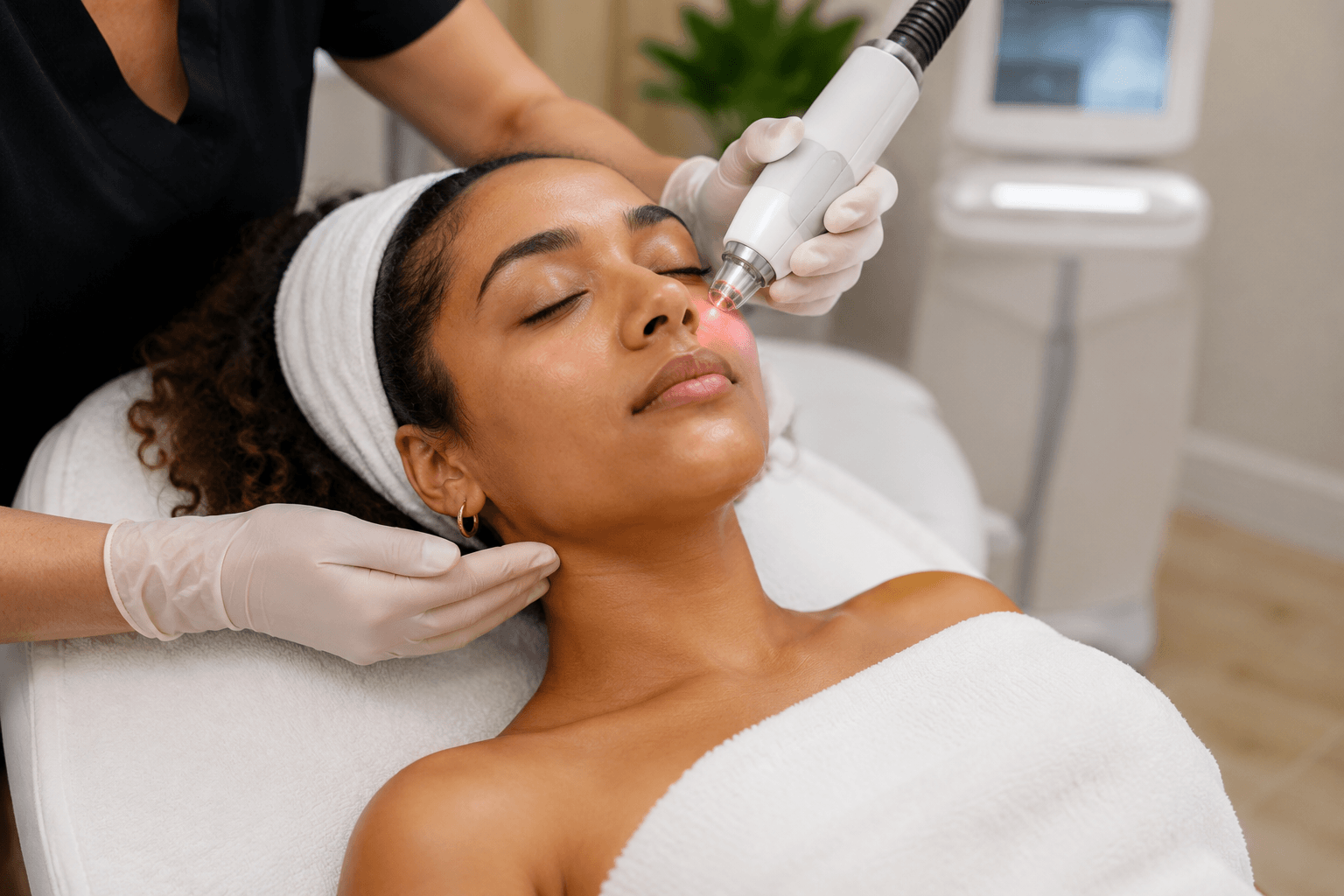
Laser skin resurfacing works by using controlled light energy to gently remove damaged outer layers of skin while stimulating new cell turnover underneath. This process helps reduce the appearance of dark spots and promotes a more even complexion over time.
For PCOS-related hyperpigmentation, the benefits can include:
- Gradual fading of dark patches
- Smoother skin texture
- Improved overall tone and clarity
- Boosted collagen production for healthier skin
What makes this treatment particularly effective is its ability to target pigmentation at different depths. Instead of only treating the surface, it encourages the skin to regenerate from within.
That said, results vary depending on factors like skin type, the severity of pigmentation, and how the body responds to treatment. A personalized approach is always essential, especially for patients with darker skin tones where safety and precision matter most.
Which Areas Are Most Commonly Treated?
PCOS-related pigmentation can appear in several areas, but certain zones are more frequently treated with laser resurfacing.
Common treatment areas include:
- Face: especially around the jawline and cheeks
- Neck: a common area for acanthosis nigricans
- Underarms: where friction and hormonal changes intersect
- Inner thighs: another high-friction zone prone to discoloration
In Atlanta, many patients seek treatment for visible areas like the face and neck first, especially when preparing for social events or professional settings. However, body areas can also be addressed depending on individual goals.
Each area may require a slightly different approach, as skin thickness and sensitivity vary across the body.
How Does Laser Resurfacing Compare to Chemical Peels?
Both laser treatments and chemical peels are used to improve skin tone and texture, but they work in different ways.
Laser Skin Resurfacing
- Uses light energy to target deeper layers of skin
- Stimulates collagen and long-term skin renewal
- Often more precise for stubborn pigmentation
Chemical Peels
- Use acids to exfoliate the top layer of skin
- Can improve mild discoloration and texture
- Typically require more frequent sessions for deeper concerns
For PCOS-related hyperpigmentation, which can be more persistent and layered, laser resurfacing is often considered a more advanced option. That does not mean chemical peels are ineffective. In some cases, they may be used as part of a broader treatment plan.
The right choice depends on your skin type, sensitivity, and how deep the pigmentation goes.
How Many Treatments May Be Needed?
One of the most common questions is how long it takes to see results. The answer depends on the severity of pigmentation and how your skin responds to treatment.
In general:
- Mild pigmentation may improve after a few sessions
- Moderate to deeper discoloration often requires a series of treatments
- Maintenance sessions may be recommended to sustain results
Spacing between sessions is important to allow the skin to heal and regenerate properly. Most providers create a customized plan that balances effectiveness with safety, especially for clients with darker skin tones.
Patience is key. While some improvement may be visible early on, the most noticeable changes often develop gradually over time.
Where Can Women with PCOS Get Treatment in Atlanta?
Atlanta has become a hub for advanced skincare treatments, with many clinics offering laser-based solutions. However, not all providers specialize in treating pigmentation concerns related to hormonal conditions like PCOS.
If you are looking in areas like Midtown or Old Fourth Ward, it is important to choose a provider who understands:
- How hyperpigmentation behaves in melanin-rich skin
- The role hormones play in skin conditions
- The importance of tailored treatment settings for safety
A thoughtful consultation should always come first. This ensures your skin is assessed properly and that the treatment plan aligns with your goals and skin type.
What About Other Skin Concerns Like Hair Growth or Sensitivity?
Many individuals with PCOS also explore treatments like laser hair removal due to increased hair growth. While laser hair removal is a separate treatment from resurfacing, both can be part of a broader skin and confidence journey.
For those researching options like black skin laser hair removal or looking for skin lightening solutions near them, it is important to understand that each treatment targets different concerns. Laser resurfacing focuses on tone and texture, while hair removal addresses unwanted hair.
Additionally, conditions like hidradenitis suppurativa or sensitive skin areas require special care. Not all treatments are suitable for every condition, so professional guidance is essential.
Inclusivity in skincare also matters. Whether someone identifies as trans or is navigating hormonal changes for any reason, personalized treatment plans ensure that skin goals are approached with care and respect.
Is Laser Skin Resurfacing Safe for Darker Skin?
Safety is one of the most important considerations, especially for individuals with darker skin tones. When performed correctly, laser treatments can be safe and effective, but the technology and expertise used make all the difference.
Key factors include:
- Using the right type of laser for melanin-rich skin
- Adjusting settings to minimize risk of post-inflammatory hyperpigmentation
- Following proper pre- and post-treatment care
This is why choosing an experienced provider is essential. The goal is not just to improve the skin, but to do so without causing additional pigmentation issues.
FAQs
Can laser skin resurfacing completely remove PCOS-related hyperpigmentation?
It can significantly reduce the appearance of dark spots, but complete removal depends on factors like skin type and hormonal balance. Many patients see noticeable improvement rather than total elimination.
Is laser skin resurfacing painful?
Most treatments are well-tolerated. Some patients describe a mild warming or tingling sensation during the session. Comfort levels can vary depending on the treatment intensity.
How soon can I see results after laser skin resurfacing?
Some improvement may be visible within a few weeks, but the most noticeable results often develop gradually as the skin continues to renew itself.
Can I combine laser resurfacing with other treatments?
Yes, many people combine it with treatments like chemical peels or targeted skincare. A professional consultation helps determine the best combination for your skin.
Is this treatment suitable for people searching for skin lightening options near them?
Laser resurfacing can help even out skin tone and reduce dark spots, but it is not designed to change your natural skin color. Its focus is on clarity and balance.
Does laser resurfacing help with areas affected by friction or conditions like HS?
It may improve pigmentation in some areas, but conditions like hidradenitis suppurativa require specialized care. A provider can help determine what is safe and effective for your situation.
Your Skin, Your Strategy
Hyperpigmentation linked to PCOS can feel like an ongoing battle, but it is not one you have to navigate alone. Treatments like laser skin resurfacing offer a way to go beyond surface-level solutions and address the deeper layers of the skin where discoloration begins.
If you are in Atlanta, GA, and exploring options around Midtown or Old Fourth Ward, taking the time to understand your skin and your treatment choices can make all the difference. Clearer, more even skin is not about chasing perfection. It is about finding what works for you and building confidence along the way.