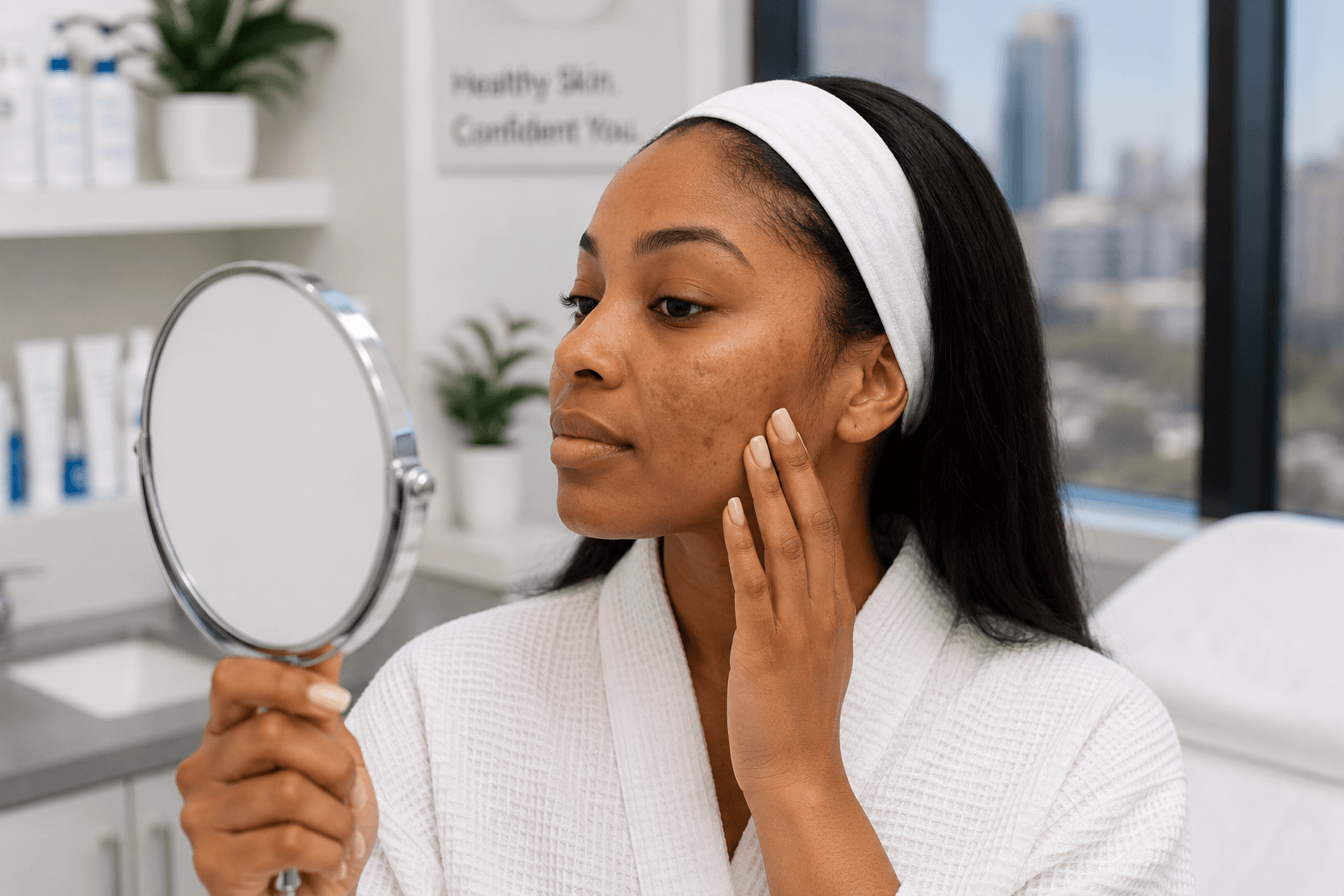
What Actually Works for Hyperpigmentation in Atlanta? A Local Guide to Fading Dark Spots
Updated for July 2026.
If you've spent any time searching for ways to fade dark spots, you already know the internet is full of conflicting advice. Vitamin C serums, retinol, lemon juice hacks, and a hundred different creams all promise the same thing, and most of them barely move the needle. If you live in Atlanta, there's an added layer to the problem that a lot of generic advice ignores entirely: our climate.
Between the humidity, the long stretches of intense sun, and the amount of time most of us spend outdoors from March through October, hyperpigmentation here tends to be more stubborn and more likely to return than it would be in a drier, cooler climate. That doesn't mean you're stuck with it. It just means the approach matters more than usual.
This guide walks through what's actually happening beneath the surface, what tends to work, and what doesn't, so you can make a decision that actually lasts.
Why Hyperpigmentation Gets Worse in Humid Climates Like Atlanta
Hyperpigmentation happens when your skin produces excess melanin in response to inflammation, sun exposure, hormonal shifts, or irritation. The spots that show up afterward, whether from acne, a cut, or years of sun exposure, are your skin's way of "remembering" that damage.
In a humid environment, a few things work against you. Sweat and heat can increase inflammation, which can trigger more melanin production. UV exposure is also more consistent throughout the year here compared to colder regions, meaning your skin rarely gets a real break from the trigger that started the discoloration in the first place. Even on cloudy days, UV rays can reach the skin and reactivate pigment cells that are already primed to overproduce.
This is part of why so many people say their dark spots "come back every summer." It's not that the treatment failed. It's that the environment keeps reintroducing the trigger.
Is a Chemical Peel or Laser Facial Better for Dark Spots?
This is one of the most common questions we get, and the honest answer is that it depends on your skin type, the depth of the pigmentation, and how your skin has responded to treatments in the past.
A chemical peel works by encouraging controlled exfoliation, removing the outer layers of pigmented skin so fresher, more even-toned skin can surface. Our Vi Chemical Peels are formulated to treat pigmentation, sun damage, and uneven tone without the extended downtime associated with more aggressive peels. For many clients dealing with sun-related dark spots or melasma-adjacent discoloration, this tends to be a strong starting point.
A laser facial, on the other hand, uses targeted light energy to break up pigment at a deeper level, which can be especially effective for more stubborn or long-standing spots. Our Laser Facial treatments are often recommended for clients who have already tried topical products without much change.
In many cases, we'll actually recommend a combination approach, alternating between the two depending on how your skin responds. This isn't a one-size-fits-all situation, which is why a proper consultation matters more than following a generic online routine.
How Many Sessions Does It Take to See Visible Fading?
Most clients start noticing visible improvement within three to four sessions, though this varies quite a bit depending on how deep the pigmentation sits and how long it's been there. Surface-level spots from recent sun exposure or minor irritation tend to respond faster. Pigmentation that's been building for years, especially melasma-type discoloration common in patients with hormonal triggers, usually takes longer and benefits from a more gradual, consistent approach.
We always tell clients that patience pays off here. Rushing the process with overly aggressive treatments can actually cause more inflammation, which ironically can make pigmentation worse before it gets better.
Can Hyperpigmentation Come Back After Treatment?
Yes, and this is the part most people don't want to hear but genuinely need to know. Hyperpigmentation is a response your skin is capable of repeating, so if the same triggers show up again, whether that's unprotected sun exposure, a new hormonal shift, or skin irritation, the discoloration can return.
The good news is that maintenance is far easier than the initial treatment. Daily SPF, avoiding picking at breakouts, and periodic maintenance sessions can keep your results looking clean for years. If you're already dealing with related concerns like dull or uneven skin tone, it's worth addressing both at the same time, since the underlying causes often overlap.
What This Looks Like for Atlanta Clients Specifically
We see a distinct pattern with clients coming from Midtown and Old Fourth Ward in particular. A lot of our clients here have active, outdoor lifestyles, whether that's running the Beltline, spending weekends on patios, or commuting on foot through neighborhoods with little shade coverage. That daily sun exposure adds up, even when it doesn't feel intense.
If this sounds familiar, building SPF into your routine isn't optional, it's the single biggest factor in whether your results hold. We often pair treatment plans with simple, realistic sun protection habits rather than an overwhelming list of products, because consistency matters far more than complexity.
What to Expect at a Consultation
If you're considering treatment for hyperpigmentation, a consultation isn't just a formality. It's where we actually look at your skin, ask about your history with sun exposure, hormonal changes, and past treatments, and figure out whether a peel, a laser facial, or a combination makes the most sense.
You can browse real client results on our before and after page to get a sense of what's realistic, and check our pricing page if budget planning is part of your decision-making process.
Frequently Asked Questions
Does hyperpigmentation ever go away completely on its own? Mild, recent discoloration can fade on its own over several months, especially with strict sun protection. Deeper or long-standing pigmentation typically needs professional treatment to fully clear.
Is it safe to treat hyperpigmentation on darker skin tones? Yes, as long as the treatment and settings are chosen with your specific skin tone in mind. This is exactly why a personalized consultation matters more than a generic treatment plan.
How long should I wait between chemical peel sessions? Most clients space peels three to four weeks apart to give the skin adequate time to heal and regenerate between treatments.
Will makeup make hyperpigmentation worse? Not typically, but heavy or irritating products can contribute to inflammation, which can worsen pigmentation over time. Non-comedogenic products are usually a safer choice.
The Bottom Line on Beating Your Dark Spots
Hyperpigmentation isn't a flaw, it's just skin doing what skin does when it's been through something, whether that's sun, hormones, or irritation. The difference between spots that fade and spots that linger usually comes down to using the right tool for your specific skin, and sticking with a plan long enough to see it through.
If you're ready to stop guessing and start seeing real, visible progress, reach out to schedule a consultation and we'll help you figure out the right path forward.