Is Laser Treatment Safe for Dark Skin? What Atlanta Patients Should Know Before Booking
Updated for July 2026.
If you have deeper skin tones and you've been researching laser hair removal, you've probably come across at least one horror story. Burns. Dark patches that took months to fade. Uneven results. It's enough to make anyone hesitant, and honestly, that hesitation is fair. For years, a lot of laser technology genuinely wasn't built with dark skin in mind.
But the technology has changed significantly, and the difference between a good experience and a bad one usually comes down to two things: the equipment being used and the experience of the person operating it. Here's what you actually need to know before booking anything.
Why Do Some Lasers Cause Burns or Dark Spots on Deeper Skin Tones?
Older laser hair removal technology, and a lot of the machines still used in lower-cost or inexperienced settings, work by targeting melanin, the pigment that gives hair its color. The problem is that melanin is also what gives skin its color. On lighter skin with dark hair, there's a clear contrast, so the laser can target the hair without much risk to the surrounding skin.
On darker skin, that contrast shrinks. The laser can struggle to tell the difference between the hair and the skin around it, which means more energy gets absorbed by the skin itself. That's what leads to burns, blistering, or post-inflammatory hyperpigmentation, dark marks that show up after the skin has been irritated or damaged.
This isn't a flaw in darker skin. It's a limitation of certain laser wavelengths and outdated equipment, and it's a completely solvable problem with the right technology.
What Technology Makes Laser Treatments Safer for Dark Skin?
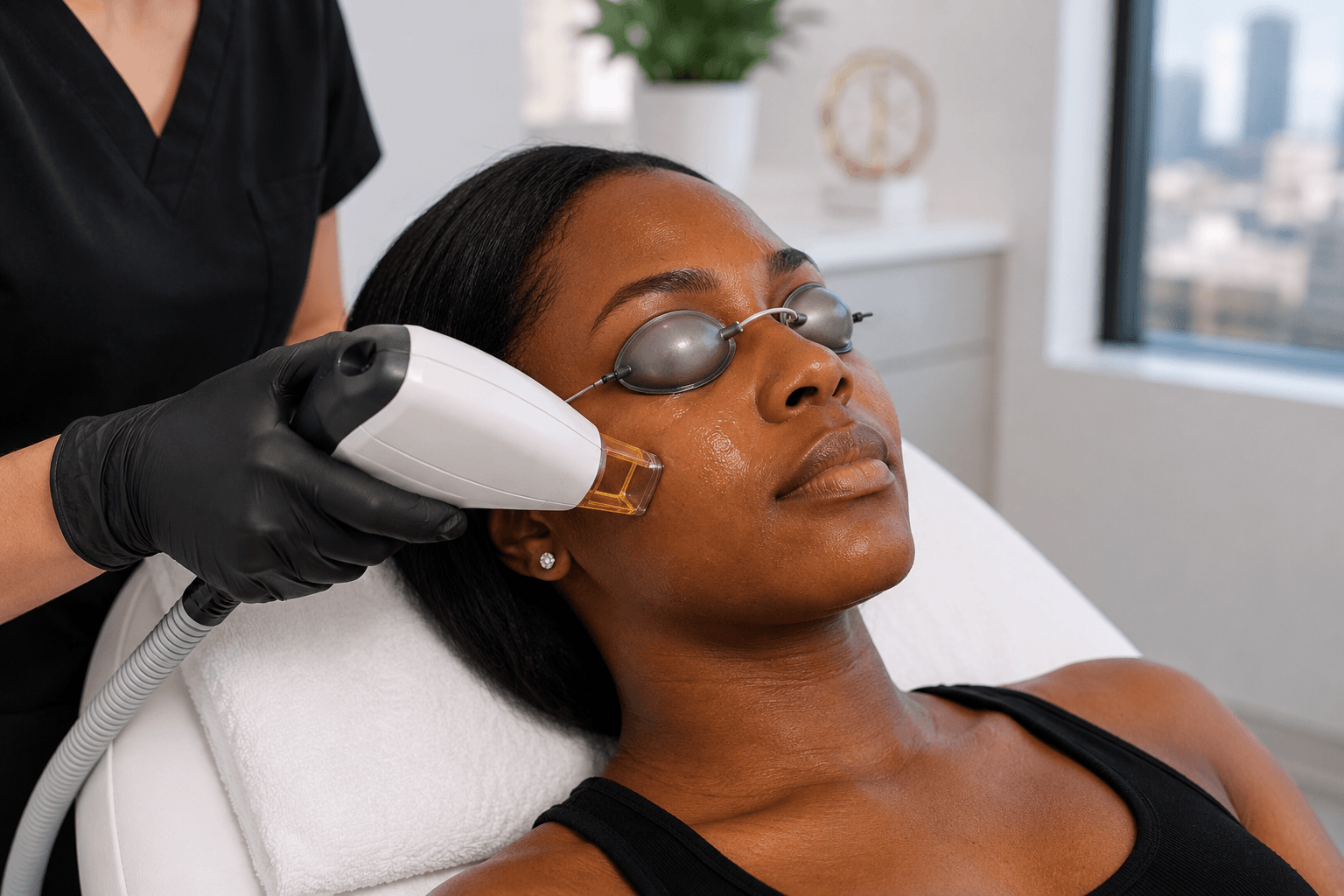
This is where the equipment conversation actually matters. We use Aerolase NeoElite technology, which uses a longer wavelength and shorter pulse duration specifically designed to treat a much wider range of skin tones safely, including deeper, richer complexions.
The longer wavelength allows the energy to reach the hair follicle more precisely while reducing how much heat builds up in the surrounding skin. In practical terms, that means less risk of the burns or discoloration associated with older diode or alexandrite lasers on melanin-rich skin.
This same technology also plays a role in how we approach Laser Facial treatments, since many of the same safety considerations apply anytime melanin-dense skin is involved.
How Do I Know if a Med Spa Is Experienced With Melanin-Rich Skin?
This is honestly the most important question on this list, more important than the specific machine, because even the best equipment can be used poorly by someone without the right training. A few things worth asking before you book anywhere:
Ask what wavelength technology they use, and whether it's specifically suited for your skin tone. Ask how many clients with your skin type they treat regularly, not just occasionally. And ask to see real before and after results on skin tones similar to yours rather than a generic stock photo gallery.
You can see our own results on our before and after laser hair removal page, which includes a range of skin tones so you can get a realistic sense of what to expect.
A good provider won't get defensive about these questions. If anything, they should welcome them, because it means you're taking your skin seriously.
What Results Can Dark-Skinned Patients Expect From Laser Hair Removal?
With the right technology and a properly trained provider, results for dark skin tones can be just as effective as results for lighter skin tones. Most clients need a series of sessions, typically six to eight, spaced four to six weeks apart, since hair grows in cycles and laser treatment is most effective when it catches follicles at the right stage of growth.
What tends to differ isn't the outcome, it's the settings. Treatments for deeper skin tones are calibrated more conservatively to protect the skin while still effectively targeting the hair follicle, which sometimes means the process is slightly more gradual. That's not a downside, it's simply the safer, smarter way to get there.
A Note for Our Atlanta Clients
Atlanta is one of the more diverse cities in the country, and we see an incredibly wide range of skin tones walk through our doors, especially from clients in Midtown and Old Fourth Ward. This diversity is exactly why having the right technology isn't optional for us, it's the standard we hold every treatment to.
If you've had a bad experience elsewhere, whether that was a burn, an uneven result, or dark marks that never fully resolved, we understand the hesitation that comes with trying again. A consultation is a low-pressure way to ask questions, see the technology in person, and decide whether you feel comfortable moving forward.
What to Do If You've Had Skin Damage From a Previous Treatment
If you're currently dealing with post-inflammatory hyperpigmentation from a previous laser experience, that's something we can help address separately. Treatments like our Vi Chemical Peels can help even out discoloration before moving forward with any additional hair removal, so your skin has the best possible foundation going into future sessions.
Frequently Asked Questions
Can laser hair removal work on very dark or deeply pigmented skin? Yes, with the right wavelength technology like Aerolase NeoElite, deeper skin tones can be treated safely and effectively.
Will laser hair removal leave permanent dark marks on dark skin? When performed with appropriate technology and settings, the risk of lasting discoloration is significantly reduced compared to older laser systems.
How many sessions are typically needed for dark skin tones? Most clients need six to eight sessions, similar to lighter skin tones, though settings are often more conservative to protect the skin.
Is it more expensive to treat dark skin with laser hair removal? Pricing is generally based on treatment area rather than skin tone. You can view current options on our pricing page.
Don't Let One Bad Experience Write Off the Whole Idea
A bad laser experience can understandably make you want to swear off the whole idea. But the issue was likely never your skin, it was the equipment or the expertise behind it. With the right technology and a provider who actually understands melanin-rich skin, laser hair removal can be safe, effective, and genuinely life-changing when it comes to reducing unwanted hair long term.
If you're ready to ask the right questions and see the technology for yourself, book a consultation and let's talk through what makes sense for your skin.