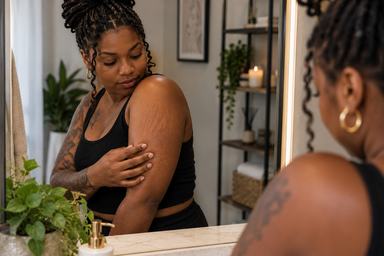
What Actually Helps Fade Stretch Marks, and Why Do They Show Up in the First Place?
Updated October 2026
If you have ever noticed silvery or darker lines on your hips, thighs, stomach or arms and wondered what you did wrong, the honest answer is nothing. Stretch marks are one of the most common skin concerns around, and they have very little to do with willpower, weight or how faithfully you moisturize. They happen because of how skin stretches. Once you understand that, it gets much easier to work out what will realistically help.
This guide covers why stretch marks form, who tends to get them, what helps them fade, and when it makes sense for people in Atlanta, Georgia to look at professional treatment such as microneedling.
What Causes Stretch Marks to Form?
Stretch marks, or striae, happen when the middle layer of skin, called the dermis, is stretched faster than it can comfortably adapt. The rapid stretching breaks down collagen and elastin fibers, the proteins that keep skin firm and springy. When those fibers tear, the skin above them thins, and that thinning is the line you see.
What are the most common triggers?
- Puberty and growth spurts. Teenagers often develop stretch marks on the thighs, hips or lower back simply because their bodies are growing quickly.
- Pregnancy. The abdomen stretches a lot in a short time, which is why stretch marks on the stomach are so common during and after pregnancy.
- Weight changes. Both gain and loss can stretch or reshape skin faster than it can keep up.
- Muscle gain. People who build muscle quickly, especially in the shoulders, arms, thighs or back, often notice new marks as their frame changes.
- Hormonal shifts and certain medications. Hormones influence how skin responds to stretching, and long-term use of corticosteroid medications is also linked to stretch marks.
Why do some people get them and others don't?
Genetics plays a big role. If close family members have stretch marks, you are more likely to get them too, no matter how carefully you care for your skin. How quickly the change happens matters more than the change itself.
Can PCOS Make Stretch Marks More Likely?
There is a connection worth knowing about. PCOS, or polycystic ovary syndrome, often comes with hormonal changes and, for some people, weight fluctuations that are hard to control. Both can affect how skin handles stretching.
If you are managing PCOS and have noticed more stretch marks, texture changes or breakouts along with it, mention it to your doctor so the bigger hormonal picture is part of the conversation. Skin So Bare also has a dedicated page on how PCOS can affect the skin if you want to read more.
Do Stretch Marks Ever Go Away on Their Own?
New stretch marks usually start out red, pink, purple or dark brown, depending on your skin tone. Over time most of them fade and flatten as the body heals the area, a process that can take anywhere from several months to a couple of years.
They rarely disappear completely without help, though. The color usually settles, but some change in texture tends to stay. That is why so many people start looking into in-office options once the color has calmed down and they want to work on the texture itself.
Do stretch marks look different on deeper skin tones?
Often, yes. On melanin-rich skin, newer marks can look darker than the surrounding skin, and mature marks frequently end up lighter, which can make them more noticeable. Deeper skin is also more prone to post-inflammatory hyperpigmentation (PIH), so any treatment needs to be gentle and well spaced rather than aggressive.
Which Products and Habits Actually Help?
Before looking at professional treatment, it is worth being honest about what over-the-counter products can and cannot do.
Does moisturizing prevent stretch marks?
Moisturizing during pregnancy or a growth phase keeps skin more comfortable and less itchy while it stretches. However, there is limited evidence that any cream fully prevents stretch marks. Genetics plays a bigger role than most product labels admit.
Are retinoid creams worth trying?
Retinoids have some of the better evidence for fading early, still-colored stretch marks. They are not recommended during pregnancy or while breastfeeding, though, so check with your doctor about timing.
What else supports the skin?
Good hydration, gentle exfoliation and daily sunscreen on exposed areas help the surrounding skin look more even. Atlanta's strong summer sun can deepen the contrast between stretch marks and the skin around them. None of these habits will erase a mark, but they do make a difference to the overall look.
Once stretch marks have matured, most people find that at-home products alone do not change the texture much. That is where professional treatment comes in.
When Do Professional Treatments Make Sense?
Stretch marks are a unique kind of scarring, and every case responds a little differently. Treatments that encourage collagen renewal and improve overall texture are generally the most widely recommended option for softening their appearance over time.
At Skin So Bare Laser Center in Old Fourth Ward, microneedling with the Rejuvapen device (listed on our technology page) is the treatment used for stretch marks. Fine, sterile needles create controlled micro-injuries that signal the skin to produce fresh collagen and elastin as it heals. Over a series of sessions, the treated skin can gradually feel smoother and look more even.
If you are comparing microneedling with lasers, peels and the many products marketed for stretch marks, our guide to stretch mark removal and what actually works goes through each option side by side. If uneven texture is your main concern, stretch marks or not, the rough texture page explains how texture issues develop and what tends to help.
What Are Realistic Expectations?
No treatment, professional or otherwise, can promise that stretch marks will disappear completely. Anyone who promises total removal is overselling what current skin science can do. What is realistic is gradual improvement in texture and tone with consistent care and, for many people, a series of professional treatments spaced out over time.
Timing matters too. Newer, still-colored marks tend to respond differently from older, silvery ones, so a provider who looks at your skin in person will give you far more useful guidance than any online article, this one included. For a sense of how microneedling results build, see our microneedling results timeline.
Who Should Book a Consultation?
If you have stretch marks anywhere on your body and the at-home approach has not made much difference, it is reasonable to sit down with a licensed skin care provider and talk through your options. That conversation should cover your skin type, how your skin has healed and pigmented in the past, and what results are actually achievable for you.
Skin So Bare works with clients from across Atlanta, including Midtown, Inman Park, Virginia-Highland, Downtown and Decatur, and specializes in skin of color and sensitive skin. Part of the process is being upfront about what a treatment can and cannot do for you specifically. You can reach out through our contact page to ask questions or book a visit.
The Not-So-Silvery Lining
Stretch marks are common, they are not a sign that anything is wrong with your body, and treating them takes more nuance than any single cream or social media trend suggests. Understand why they formed, give at-home care a fair try, and if the texture still bothers you, have an honest, no-pressure conversation at our Auburn Avenue studio.
Frequently Asked Questions About Stretch Marks
Do stretch marks ever fully disappear?
Not usually on their own. Most stretch marks fade in color over time, but some texture change tends to remain unless the area is treated.
Do only certain body types get stretch marks?
No. Stretch marks affect people of every body size, gender and skin tone. Genetics and how fast the skin stretches matter much more than body type.
Can microneedling get rid of stretch marks completely?
Microneedling supports collagen renewal and improves texture. It will not erase stretch marks, but many people see smoother, more even-looking skin over a series of sessions.
Are stretch marks linked to PCOS?
Hormonal shifts and weight changes associated with PCOS can make skin more prone to stretch marks. If you notice a pattern, talk to your doctor.
Does Skin So Bare treat stretch marks?
Yes. Skin So Bare offers microneedling for stretch marks at our Old Fourth Ward studio in Atlanta, Georgia, and a consultation is the best way to see whether it suits your skin and goals.