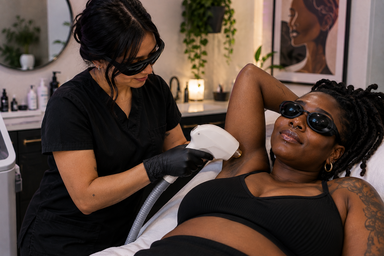
Is Laser Hair Removal Safe for Black Skin in Atlanta, Georgia?
For a long time, this was a fair question with a complicated answer. Older laser technology struggled to tell the difference between the pigment in a hair follicle and the pigment in the surrounding skin, which meant that clients with deeper skin tones faced a real risk of burns, blistering, or dark marks that took months to fade. That history left a lot of people understandably hesitant to try laser hair removal at all, even as the technology behind it has changed considerably.
If you have Black or deeply melanin-rich skin and have been searching for black skin laser hair removal in Atlanta, Georgia, this article walks through what changed, what to actually look for in a provider, and why the right technology and technique make all the difference between a treatment that works and one that causes harm.
Updated this month in 2026 to reflect the latest safety standards for treating darker skin tones.
Why Did Older Laser Technology Struggle With Darker Skin?
Most early hair removal lasers relied on wavelengths that targeted melanin broadly, meaning they could not always distinguish between the pigment in a hair follicle and the pigment already present in the skin itself. On lighter skin, this was less of an issue because there was less competing pigment to confuse the laser. On deeper skin tones, the laser sometimes targeted the skin itself along with the hair, leading to burns, blistering, or post-inflammatory hyperpigmentation.
This is not an outdated concern that no longer matters. It is exactly why the type of technology and the experience of the provider still make a measurable difference in outcomes today.
What Changed With Newer Laser Technology?
Newer devices use longer wavelengths, such as 1064 nm technology, that bypass more of the surface pigment and target the hair follicle more precisely, significantly reducing the risk of burns or discoloration. The Aerolase NeoElite used at Skin So Bare is FDA cleared and specifically designed to be safe for darker skin tones, which is a meaningful shift from the risks associated with older equipment.
What Should You Look for in a Provider?
Not every med spa or clinic has equipment suited for deeper skin tones, and not every technician has hands on experience treating Black skin specifically. Before booking anywhere, it is worth asking directly what technology is used, whether it is cleared for darker skin tones, and how the provider adjusts settings based on individual skin type rather than applying one setting to everyone.
At Skin So Bare, this is not an afterthought. The laser hair removal service explicitly uses devices medically cleared for darker skin tones and coarse hair, with settings adjusted individually for skin tone, hair thickness, and treatment area. The practice was built specifically around treating skin that has historically been underserved or mistreated by traditional laser providers.
How Are Settings Adjusted for Black Skin Specifically?
Rather than using a single default setting, treatment is customized based on a real assessment of your skin, including tone, hair density, and how your skin has responded to hair removal in the past. This individualized approach is what allows deeper skin tones to be treated effectively without the burns or discoloration associated with older, less precise technology.
Can Laser Hair Removal Help With Razor Bumps on Black Skin?
Yes, and this is one of the most common reasons Black clients seek out laser hair removal specifically. Pseudofolliculitis barbae, more commonly known as razor bumps, is especially prevalent in people with coarse or tightly curled hair, since the hair is more likely to curl back into the skin after shaving. This repeated irritation often leads to dark marks and rough texture over time.
By treating hair at the follicle level, laser hair removal reduces the frequency of shaving needed, which in turn reduces the cycle of irritation that causes ingrown hairs and razor bumps in the first place. You can learn more about this on the unwanted ingrown hair concerns page.
Does Laser Hair Removal Help With Dark Marks Left by Razor Bumps?
While the primary goal of laser hair removal is hair reduction rather than pigment correction, eliminating the source of repeated irritation often allows existing dark marks to fade more naturally over time. For more targeted pigment treatment, the practice may also recommend VI Chemical Peels or Aerolase sessions, which are covered in more detail in the article on laser skin lightening in Atlanta, Georgia.
What About Hormonal Hair Growth From PCOS?
PCOS (polycystic ovary syndrome) can cause excess or unwanted hair growth due to hormonal imbalances, and this is a concern that affects people across all skin tones, including Black clients who may already be managing other symptoms of the condition. Laser hair removal is frequently used as a longer term management option for this type of hair growth, alongside guidance from a medical provider on the underlying hormonal factors. More detail is available on the PCOS concerns page.
Is There Any Added Risk for Clients With PCOS and Darker Skin?
Not when the treatment plan accounts for both factors together. Hormonal hair regrowth may mean a slightly longer maintenance schedule is needed, but the core safety considerations for darker skin still apply and are addressed the same way through appropriate technology and individualized settings.
What Does the Treatment Process Actually Look Like?
Before your first session, you will be asked to shave the treatment area, avoid waxing or plucking in the weeks prior, and limit sun exposure. During treatment, a trained provider adjusts the laser settings specifically for your skin tone and hair type before beginning. Afterward, some redness or slight puffiness around the follicles is normal and typically settles within a day.
Most clients need a series of six to eight sessions, spaced several weeks apart, for significant and lasting hair reduction, since hair grows in cycles and only actively growing follicles respond to treatment at any given time. You can see real results in the laser hair removal before and after gallery and read a full walkthrough in the laser hair removal guide for Atlanta, Georgia.
Why This Matters Beyond the Treatment Itself
Skin So Bare was founded with a clear mission, to make sure clients who have historically been overlooked or underserved by traditional aesthetic providers finally have a safe, judgment free place to get effective treatment. That includes Black clients, transgender clients, and anyone who has felt dismissed elsewhere. You can read more about that mission on the about page.
The Real Bottom Line
Laser hair removal absolutely can be safe and effective for Black skin, but it depends entirely on the technology used and the provider's actual experience treating deeper skin tones. Asking the right questions before booking, and choosing a provider who treats this as a core part of their practice rather than an afterthought, is what makes the difference between a treatment that delivers and one that causes harm.
Frequently Asked Questions
Is laser hair removal safe for Black skin? Yes, when performed with technology cleared for darker skin tones and settings adjusted by an experienced provider, laser hair removal can be both safe and effective for Black skin.
Why did older laser hair removal sometimes cause burns on darker skin? Older devices used wavelengths that had difficulty distinguishing between pigment in the hair follicle and pigment in the surrounding skin, increasing the risk of burns or discoloration on deeper skin tones.
Can laser hair removal help reduce razor bumps on Black skin? Yes, by treating hair at the follicle level, it reduces the shaving frequency that typically causes razor bumps and related irritation.
How many sessions are needed for lasting results? Most clients need between six and eight sessions spaced several weeks apart, though this can vary based on hair type and hormonal factors.
Does PCOS affect how laser hair removal is approached for Black clients? It may extend the maintenance schedule due to hormonal hair regrowth, but the core safety approach for darker skin remains the same.
Ready to Experience Laser Hair Removal Done Right?
You deserve a provider who understands your skin from the very first consultation, not one learning as they go. Reach out to our Atlanta, Georgia team to schedule a consultation built around your actual skin and goals.