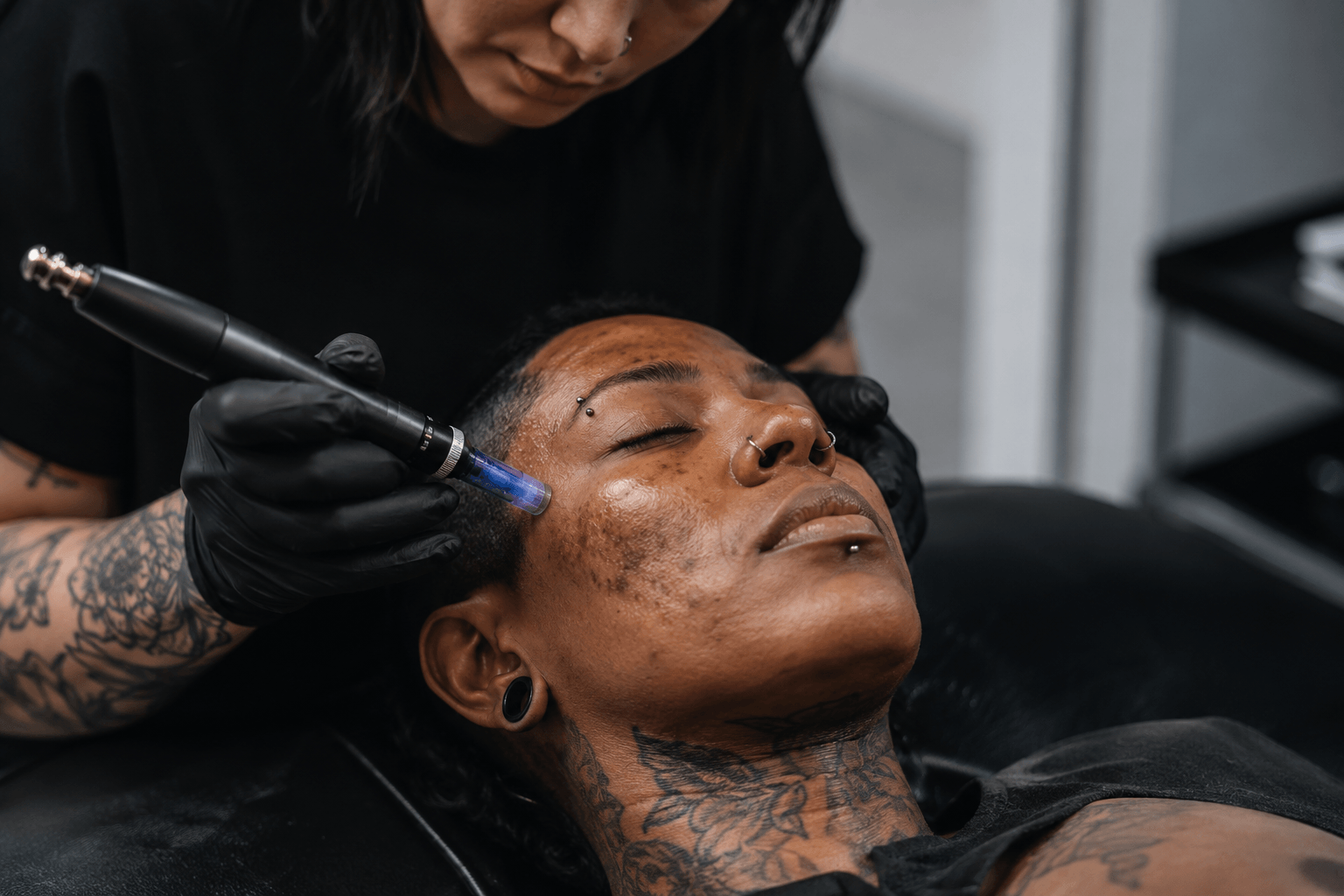
Is Microneedling Safe for Hyperpigmentation and Melasma? A Realistic Guide for Atlanta Skin Types
Updated May 2026
Hyperpigmentation and melasma can feel like stubborn, unpredictable skin concerns. One day your skin looks even and calm, the next day darker patches seem more noticeable, especially after sun exposure, stress, or hormonal changes. If you’ve been researching solutions, you’ve likely come across microneedling and wondered if it’s actually safe or if it could make things worse.
Let’s break it down honestly. This guide covers what microneedling really does, how it interacts with melasma, and what you should know before booking microneedling in Atlanta, GA.
What Causes Melasma and Uneven Skin Tone?
Melasma is not just “regular pigmentation.” It is a complex skin condition triggered by multiple internal and external factors.
Common triggers include:
- Hormonal changes such as pregnancy or birth control
- Sun exposure, even in small amounts
- Heat and inflammation
- Genetics
- Certain skincare products that irritate the skin
Unlike sunspots, melasma sits deeper in the skin and is easily reactivated. That’s why aggressive treatments or improper techniques can sometimes worsen it instead of improving it.
For many people in Atlanta, where sun exposure and humidity are high year-round, managing pigmentation requires a more strategic approach rather than quick fixes.
What Is Microneedling?
Microneedling is a treatment that uses tiny, controlled needles to create micro-injuries in the skin. This stimulates collagen production and accelerates skin renewal.
When performed with advanced devices like SkinPen, microneedling can:
- Improve skin texture
- Reduce the appearance of fine lines
- Help fade certain types of pigmentation
- Enhance product absorption
It is often paired with targeted serums or treatments to improve results.
While it sounds intense, it is actually considered minimally invasive when done correctly by trained professionals.
Can SkinPen Worsen Hyperpigmentation?
This is one of the most important questions and the answer depends on how the treatment is performed.
Microneedling itself does not cause hyperpigmentation. However, improper technique or incorrect depth can trigger post-inflammatory hyperpigmentation, especially in darker skin tones.
Risk factors include:
- Going too deep too quickly
- Using aggressive settings on sensitive or inflamed skin
- Skipping proper pre-treatment preparation
- Poor aftercare, especially sun exposure
When performed properly, SkinPen microneedling is actually designed to be safe across skin types, including those prone to pigmentation.
The key is customization. A one-size-fits-all approach does not work for melasma.
Is Microneedling Safe for Darker Skin Tones?
Yes, microneedling is often one of the safest options for Fitzpatrick skin types IV to VI when done correctly.
Unlike some laser treatments that carry a higher risk of pigmentation changes, microneedling works by stimulating the skin without introducing heat.
Why this matters:
- Less heat means less risk of triggering melasma
- Controlled injury allows for gradual improvement
- It can be adjusted based on skin sensitivity
That said, expertise matters. Treating darker skin tones requires a provider who understands how to balance results with safety.
In a diverse city like Atlanta, this becomes even more important. Skin clinics need to be experienced in treating all skin types, including clients with deeper tones, tattoos, and unique skin histories.
What Is the Difference Between VI Peels and Microneedling?
Both treatments can help with pigmentation, but they work in very different ways.
Microneedling:
- Stimulates collagen through micro-injuries
- Works deeper in the skin
- Improves texture and mild pigmentation
- Gradual results over multiple sessions
VI Chemical Peels:
- Use medical-grade acids to exfoliate the skin
- Target surface-level pigmentation more aggressively
- Provide quicker visible brightening
- May include specific formulas for melasma
For many clients, the best results come from combining both approaches in a customized plan rather than choosing just one.
Microneedling can rebuild the skin while peels help lift discoloration at the surface.
Can Microneedling Help Sun Damage?
Yes, microneedling can improve signs of sun damage, but it is not a standalone solution.
It helps by:
- Boosting collagen to repair damaged skin
- Improving uneven tone over time
- Enhancing the effectiveness of brightening products
However, without proper sun protection, results will not last.
Atlanta’s climate makes daily SPF non-negotiable. Even short periods outside can undo progress if the skin is unprotected.
What Products Should You Use After Microneedling?
Aftercare is just as important as the treatment itself, especially when dealing with pigmentation.
Immediately after treatment:
- Gentle cleanser
- Hydrating serums
- Barrier-repair moisturizers
In the following days:
- Avoid harsh actives like retinol or acids
- Use broad-spectrum SPF daily
- Incorporate calming and brightening ingredients gradually
For pigmentation concerns, providers may recommend:
- Growth factors or PRP
- Brightening agents like tranexamic acid
- Medical-grade skincare tailored to melasma
Consistency matters more than intensity. Overloading your skin can trigger more pigmentation.
How Many Sessions Help Pigmentation Concerns?
Microneedling is not a one-and-done treatment, especially for melasma.
Typical treatment plan:
- 3 to 6 sessions spaced about 4 weeks apart
- Maintenance sessions every few months
Results are gradual because the goal is to improve the skin safely without triggering inflammation.
Clients who combine microneedling with proper skincare and sun protection often see the most consistent improvements.
Where Can You Find Microneedling in Atlanta, GA?
If you are looking for microneedling in Atlanta, GA, choosing the right provider matters more than choosing the treatment itself.
Look for a clinic that:
- Has experience treating hyperpigmentation and melasma
- Works with diverse skin tones and conditions
- Uses FDA-cleared devices like SkinPen
- Offers customized treatment plans rather than generic packages
A personalized consultation is essential. Pigmentation is not something that should be treated with guesswork.
A Note on Other Popular Treatments
You may also come across treatments like Botox, face filler, lip injections, IV hydration, PRP under eyes, Nutrafol women, PDO threading, peptide injections, or thread lift near me during your research.
These treatments serve different purposes:
- Botox and fillers focus on wrinkles and volume
- PRP under eyes targets dark circles and skin quality
- PDO threading and thread lifts address skin laxity
- IV hydration and supplements support overall wellness
While they can complement skin health, they are not direct treatments for melasma or hyperpigmentation.
Visual Direction for a More Inclusive Experience
When considering microneedling, representation matters. A clinic environment should reflect real clients, not just polished, unrealistic imagery.
Ideal visual representation includes:
- Clients with tattoos and piercings
- Transgender and non-binary individuals
- A wide range of skin tones, especially Fitzpatrick V and VI
- Real skin textures, not overly edited perfection
This creates a space where people feel comfortable, seen, and respected, especially when dealing with vulnerable skin concerns like pigmentation.
FAQs
Is microneedling safe for melasma?
Yes, when performed correctly, microneedling can be safe for melasma. The key is using the right depth, technique, and aftercare to avoid triggering inflammation.
Can microneedling make hyperpigmentation worse?
It can if done improperly. Aggressive treatments or poor aftercare may lead to post-inflammatory hyperpigmentation, especially in darker skin tones.
How long does it take to see results from microneedling?
Most people begin to see improvements after 2 to 3 sessions, with continued progress over several months.
Is microneedling better than chemical peels for pigmentation?
They serve different purposes. Microneedling works deeper to rebuild the skin, while peels target surface discoloration. Many clients benefit from combining both.
Is microneedling painful?
A numbing cream is typically used, so the treatment is generally well tolerated. Most clients describe it as mild discomfort rather than pain.
How do I maintain results after microneedling?
Consistent skincare, sun protection, and occasional maintenance treatments are essential to preserve results.
Your Skin, But Smarter This Time
Microneedling is not a miracle fix, but it can be a powerful tool when used strategically. For hyperpigmentation and melasma, success comes down to patience, customization, and working with professionals who understand your skin.
If your goal is clearer, more even skin without triggering more pigmentation, microneedling can absolutely be part of the solution. Just make sure it is done with intention, not intensity.
Because when it comes to your skin, especially in a city like Atlanta, doing less but doing it right will always win.