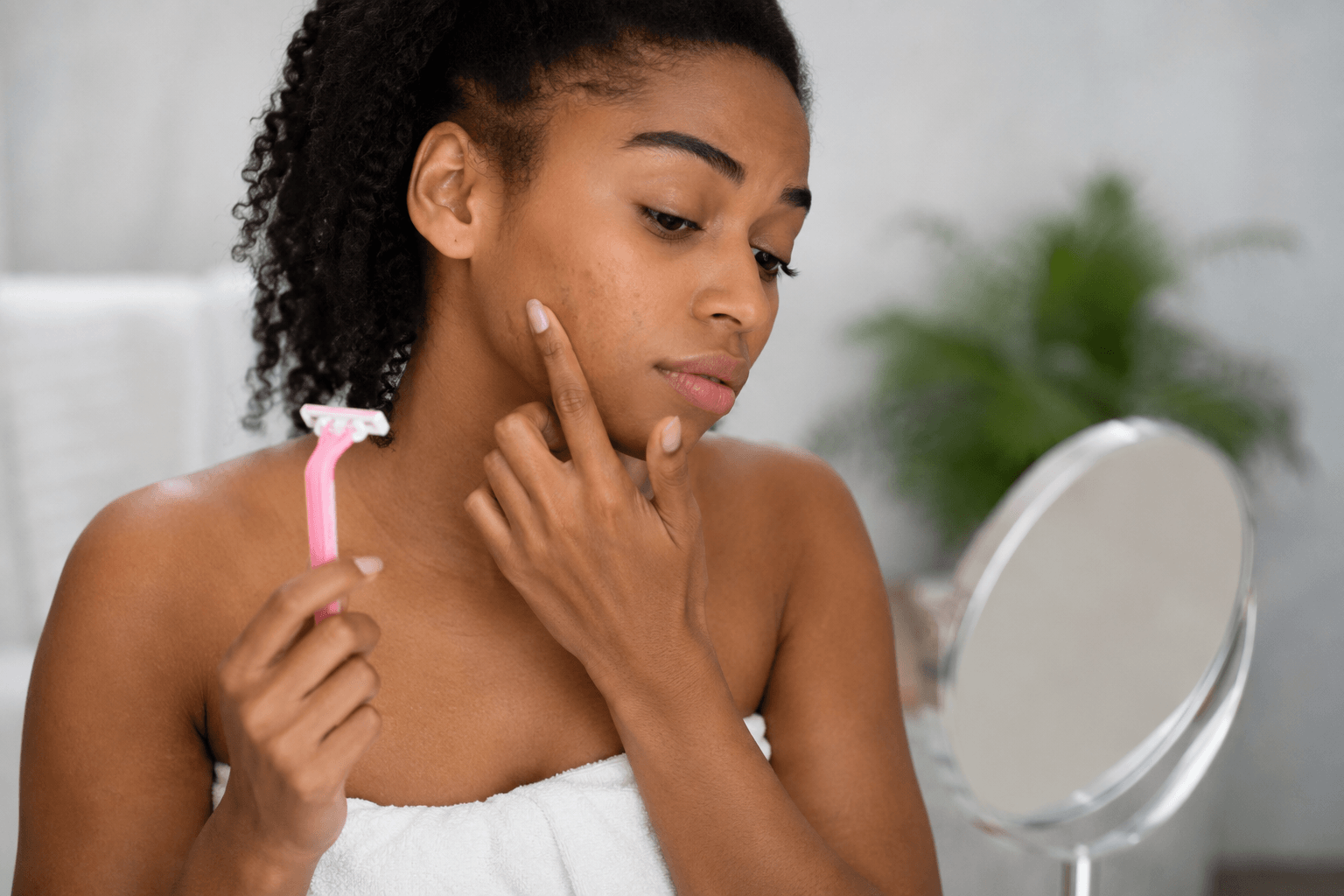
Why Does Shaving Cause Dark Spots on Black Skin?
Updated June 2026
If you’ve ever noticed dark spots forming after shaving, you’re not alone. This is a common concern, especially for people with melanin-rich skin. What may start as a quick grooming routine can lead to lingering discoloration, uneven tone, and frustration.
For many individuals in Atlanta, GA, especially around Midtown and Old Fourth Ward, the conversation is shifting from quick fixes to long-term skin health. Understanding why these dark spots form is the first step toward preventing them and choosing better solutions that support your skin rather than stress it.
Why Is Black Skin More Prone to Post-Inflammatory Hyperpigmentation?
Melanin-rich skin is beautifully complex, but it also reacts differently to irritation. When the skin experiences trauma, even something as minor as shaving, it can trigger a response known as post-inflammatory hyperpigmentation.
This happens because melanocytes, the cells responsible for pigment, become overactive during the healing process. Instead of returning to your natural tone, the skin produces excess pigment in the affected area.
In simple terms, your skin is trying to protect itself, but the result is visible dark spots that can linger for weeks or even months.
Several factors make this more common in darker skin tones:
- Higher melanin activity, which increases sensitivity to inflammation
- A stronger pigment response to even minor irritation
- Slower fading of discoloration compared to lighter skin tones
This is why something as routine as shaving can lead to noticeable changes in skin tone over time.
How Can Razor Irritation Cause Dark Spots?
Shaving might seem harmless, but it creates micro-injuries on the surface of the skin. Each pass of the razor can cause friction, especially if the blade is dull or the skin is not properly prepped.
This irritation leads to inflammation, which is the root cause of hyperpigmentation.
Common shaving habits that increase the risk include:
- Shaving against the direction of hair growth
- Using dry razors or skipping proper lubrication
- Applying too much pressure
- Reusing old or dull blades
When the skin becomes inflamed, it sends signals to produce more pigment as part of the healing process. Over time, repeated irritation can lead to patchy dark areas that are difficult to fade.
For individuals dealing with hormonal conditions like PCOS or inflammatory skin concerns such as HS, shaving can worsen the cycle due to increased sensitivity and frequent hair removal needs.
Are Ingrown Hairs Making Hyperpigmentation Worse?
Ingrown hairs are one of the biggest culprits behind persistent dark spots. They occur when hair curls back into the skin instead of growing outward, causing inflammation, bumps, and sometimes infection.
For those with coarse or curly hair textures, which is common in Black skin, ingrown hairs are more likely to develop.
Each ingrown hair can lead to:
- Redness and swelling
- Pain or tenderness
- Dark marks once the inflammation heals
The more frequently ingrown hairs occur, the more opportunities there are for hyperpigmentation to develop. This creates a frustrating cycle where shaving leads to bumps, and bumps lead to dark spots.
Can Laser Hair Removal Reduce Future Dark Spots?
One of the most effective ways to break the cycle is to reduce the need for shaving altogether. This is where black skin laser hair removal becomes a game changer.
Unlike traditional methods, laser hair removal targets the hair follicle directly, reducing hair growth over time. With fewer hairs to shave, there is significantly less irritation and fewer opportunities for hyperpigmentation to form.
Modern laser technology has advanced to safely treat darker skin tones when performed by experienced providers. This is especially important because older laser systems were not designed with melanin-rich skin in mind.
For those searching for laser hair removal in Atlanta, GA, choosing a provider who understands the nuances of darker skin is essential. Treatments that are customized for melanin-rich skin can help minimize risks while delivering smoother, clearer results.
Over time, many clients notice:
- Fewer ingrown hairs
- Reduced irritation
- A more even skin tone
- Less reliance on daily or weekly shaving
What Other Treatments Improve Existing Pigmentation?
While preventing future irritation is key, addressing existing dark spots often requires targeted treatments.
There are several approaches that can help improve the appearance of hyperpigmentation:
Topical Treatments
Ingredients like vitamin C, niacinamide, and gentle exfoliating acids can help brighten the skin and gradually fade discoloration. Consistency is important, as results build over time.
Chemical Peels
Light to medium peels can help remove damaged surface layers, encouraging new, evenly pigmented skin to emerge. These must be carefully selected for darker skin tones to avoid further irritation.
Professional Skincare Guidance
It is important to note that while some people search for skin lightening near me, the goal should always be achieving healthy, even-toned skin rather than altering your natural complexion.
Should You Consider Laser Skin Resurfacing?
Laser skin resurfacing is another option that can improve skin texture and tone, but it requires careful consideration for darker skin tones.
When performed correctly, it can:
- Stimulate collagen production
- Improve uneven texture
- Reduce the appearance of dark spots
However, not all laser resurfacing treatments are suitable for melanin-rich skin. The wrong approach can lead to additional pigmentation issues.
This is why choosing a provider with experience in treating darker skin is critical. They can determine whether laser resurfacing is appropriate or if alternative treatments would be safer and more effective.
A Smarter Approach to Hair Removal and Skin Health
Shaving is often seen as the easiest solution, but for many people, it creates more problems than it solves. Dark spots, irritation, and ingrown hairs can take a toll on both your skin and your confidence.
Exploring long-term solutions like black skin laser hair removal in Atlanta, GA allows you to move away from constant irritation and toward smoother, healthier skin.
For those in Midtown and Old Fourth Ward, access to advanced treatments means you do not have to settle for temporary fixes. Instead, you can invest in options that support your skin’s natural beauty while reducing the triggers that cause hyperpigmentation.
Let’s Talk About That Glow-Up
Clear, even-toned skin is not about perfection. It is about understanding your skin and choosing methods that work with it instead of against it.
If shaving has been leaving behind more than just smooth skin, it might be time to rethink your routine. With the right approach, you can reduce irritation, prevent dark spots, and finally feel confident in your skin without the constant cycle of damage and repair.
FAQs
Why does shaving cause dark spots on Black skin more than other skin types?
Melanin-rich skin reacts more strongly to inflammation. Even minor irritation from shaving can trigger excess pigment production, leading to visible dark spots that take longer to fade.
Is laser hair removal safe for dark skin?
Yes, when performed with the right technology and by experienced professionals. Modern systems designed for darker skin tones make black skin laser hair removal a safe and effective option for reducing hair and preventing irritation.
Can hyperpigmentation from shaving go away on its own?
Some dark spots may fade over time, but it can take several months. Consistent skincare and professional treatments can help speed up the process and improve overall skin tone.
Does laser hair removal help with ingrown hairs?
Yes, it significantly reduces ingrown hairs by targeting the hair follicle and limiting regrowth. This helps prevent the inflammation that leads to both bumps and dark spots.
What is the difference between skin brightening and skin lightening?
Skin brightening focuses on restoring an even, healthy tone by reducing discoloration. Skin lightening often refers to altering the natural skin color, which is not the goal of most professional treatments.
Where can I find laser hair removal in Atlanta, GA for darker skin tones?
Atlanta offers several options, especially in areas like Midtown and Old Fourth Ward. It is important to choose a provider experienced in treating melanin-rich skin to ensure safe and effective results.