What Is Microneedling and Who Is It Really For? An Atlanta Guide to Skin Pen Treatments
Microneedling shows up constantly in skincare conversations, from influencer routines to dermatologist recommendations, but a lot of people still aren't entirely sure what it actually involves or whether it's the right fit for their skin. If you've typed "what is microneedling" into a search bar recently, you're not alone, and you deserve a straightforward answer instead of vague marketing language.
Here's what the treatment actually does, who tends to benefit most, and what a realistic experience looks like from start to finish.
What Is Microneedling and How Does a Skin Pen Treatment Work?
Microneedling is a treatment that uses fine, sterile needles to create controlled micro-injuries in the skin. This might sound intense, but the needles are extremely small, and the goal isn't to injure the skin in a harmful way, it's to trigger the skin's natural healing response, which includes increased collagen and elastin production.
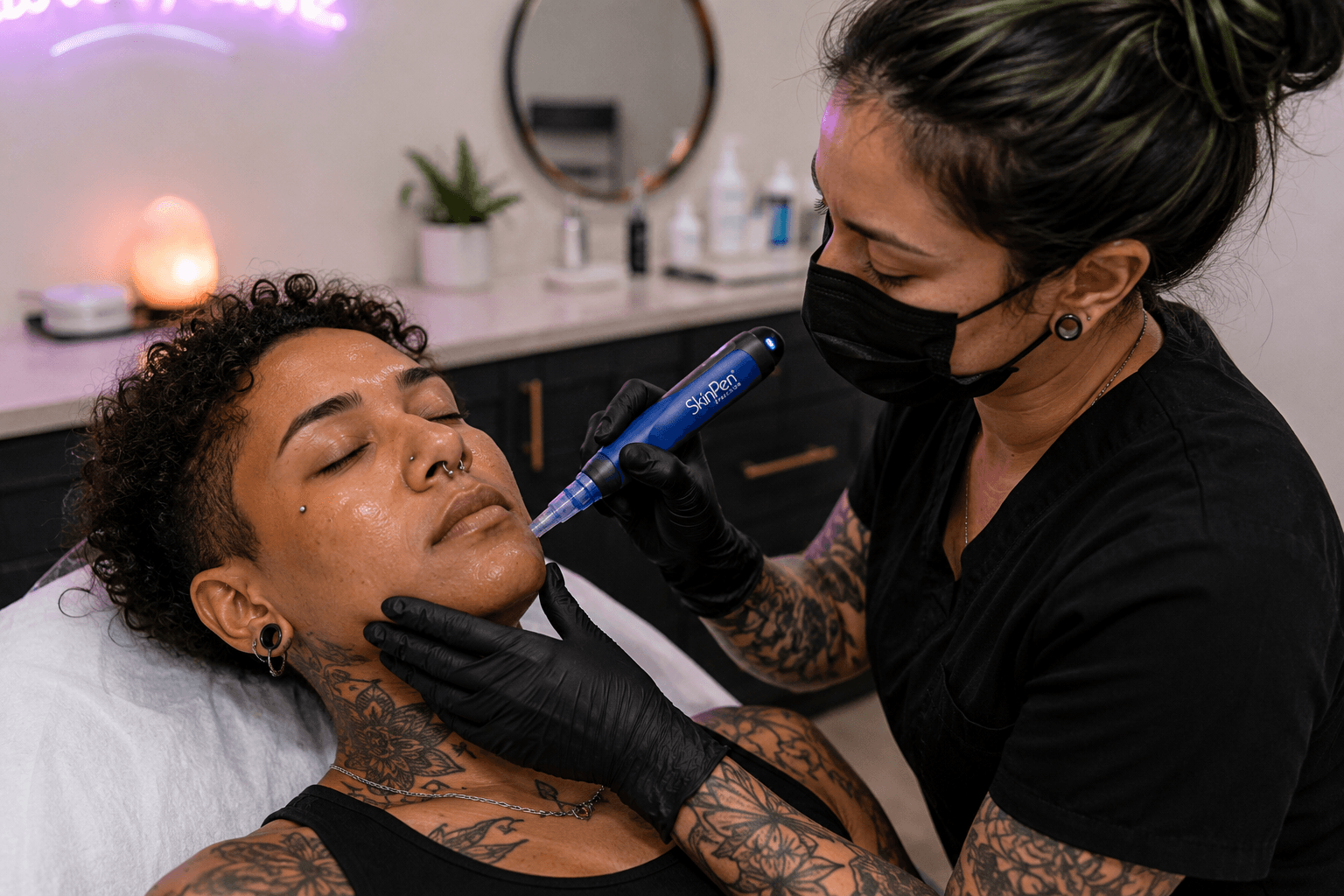
A Skin Pen is one of the most widely used and clinically studied microneedling devices, and it's the system behind our Microneedling treatments. It allows for precise control over needle depth, which matters quite a bit since different skin concerns respond better to different treatment depths. As the skin heals over the following days and weeks, it rebuilds itself with fresher, more structured tissue, which is what leads to the smoother texture and more even tone that people typically notice.
What Skin Concerns Does Microneedling Actually Treat?
Microneedling is genuinely versatile, which is part of why it's become such a popular option. It's commonly used for acne scarring, since the treatment helps remodel the uneven texture left behind by past breakouts. It's also effective for fine lines, enlarged pores, and general skin texture concerns, since the increased collagen production helps firm and smooth the skin over time.
Beyond texture, many clients use microneedling to address dull or uneven skin tone, since the renewed skin surface tends to reflect light more evenly and look more vibrant overall. It's often paired with other treatments too, we frequently combine it with our Vi Chemical Peels or Customizable Facial as part of a broader skin rejuvenation plan.
Is Microneedling Safe for Melasma or Hyperpigmentation-Prone Skin?
This is a genuinely important question, and one worth asking before starting treatment. Microneedling can be safe and even beneficial for hyperpigmentation-prone skin, but it requires careful handling, since triggering inflammation in skin that's already prone to overproducing pigment carries some risk if not approached correctly.
At the right depth, with proper aftercare and sun protection, most clients tolerate microneedling well, even those managing melasma or hyperpigmentation. That said, this is exactly the kind of nuance that should be discussed at a consultation rather than assumed, since everyone's skin responds a little differently, and a conservative starting approach tends to be the safest path forward for pigmentation-prone skin specifically.
How Soon Will I See Results, and How Many Sessions Are Recommended?
Most clients start noticing improved texture and tone within a few weeks of their first session, as the skin completes its natural healing and collagen-building process. That said, microneedling isn't a one-and-done treatment. Most treatment plans involve a series of three to six sessions spaced four to six weeks apart, since collagen production builds gradually and consistent sessions compound the results over time.
After the initial series, many clients continue with periodic maintenance sessions every few months to sustain their results, since collagen production naturally slows as part of the aging process regardless of skin type.
What Does the Treatment and Recovery Process Actually Feel Like?
Most clients describe the sensation as a mild pricking or vibrating feeling rather than significant pain, especially with a topical numbing option beforehand. Immediately afterward, skin typically looks flushed or slightly red, similar to a mild sunburn, and this usually fades within a day or two.
Recovery is generally minimal compared to more invasive treatments, which is part of why microneedling has become such a popular option for people who want visible results without significant downtime. Most clients are comfortable returning to normal activities the next day, with a few days of gentle skincare and diligent sun protection recommended during the healing window.
What This Looks Like for Atlanta Clients
We see a lot of interest in microneedling from clients across Atlanta, including many from Midtown and Old Fourth Ward, often looking for a treatment that fits into a busy schedule without requiring extended recovery time. Atlanta's year-round sun exposure also makes post-treatment sun protection especially important here, since freshly treated skin is more sensitive to UV exposure during the healing process.
What to Expect at Your First Visit
A consultation will cover your specific skin concerns, your history with pigmentation or sensitivity, and realistic expectations for your treatment plan. You can browse real results on our before and after dermal needling page, and check our pricing page to plan out a full treatment series.
Frequently Asked Questions
Is microneedling the same as dermarolling at home? No. Professional microneedling with a Skin Pen device allows for precise, adjustable needle depth performed under sterile, controlled conditions, which offers more consistent and safer results than at-home rollers.
How is microneedling different from a chemical peel? Microneedling works by creating controlled micro-injuries to stimulate collagen, while a chemical peel works through exfoliation. They target skin renewal differently and are sometimes combined for enhanced results.
Can microneedling help with acne scars specifically? Yes, it's one of the more commonly recommended treatments for acne scarring, since it helps remodel uneven texture left behind by past breakouts.
Is there downtime after a microneedling session? Most clients experience mild redness for a day or two, with minimal disruption to daily activities compared to more invasive skin treatments.
The Real Answer to "What Is Microneedling"
At its core, microneedling is your skin's own healing response, guided in a precise, controlled way to rebuild smoother, more even, more resilient skin over time. It's not an overnight fix, but for the right skin concerns, it's one of the more genuinely effective, low-downtime options available.
If you're curious whether it's the right fit for your skin, schedule a consultation and we'll walk you through a plan built around your actual skin, not a generic routine.