Can PCOS Cause Dark Skin Patches? What They Mean and What Actually Helps in Atlanta
Updated October 2026
Maybe you've noticed a darker, velvety band on the back of your neck. Or the spots along your jawline, where breakouts used to be, just won't fade. If you have PCOS, both are common, and both can feel like your skin is working against you.
Not every dark patch is the same, though. Some are a medical signal that deserves a doctor's attention. Others are marks left behind by breakouts, shaving, or sun, and those often respond well to the right professional care. Here's how to tell them apart, and what makes sense for melanin-rich skin here in Atlanta.
What Is PCOS, and Why Does It Show Up on Your Skin?
Polycystic ovary syndrome is one of the most common hormonal conditions in people with ovaries. Most people know it for irregular cycles and fertility concerns. Underneath, though, PCOS involves higher androgen levels and problems with how the body handles insulin, and the skin responds to both.
Androgens can trigger extra oil, breakouts and unwanted hair. Insulin resistance can change the skin itself in certain areas. Each pathway leads to a different kind of dark patch, which is why figuring out which one you have comes first.
Which Dark Patches Are Linked to PCOS?
Is it acanthosis nigricans?
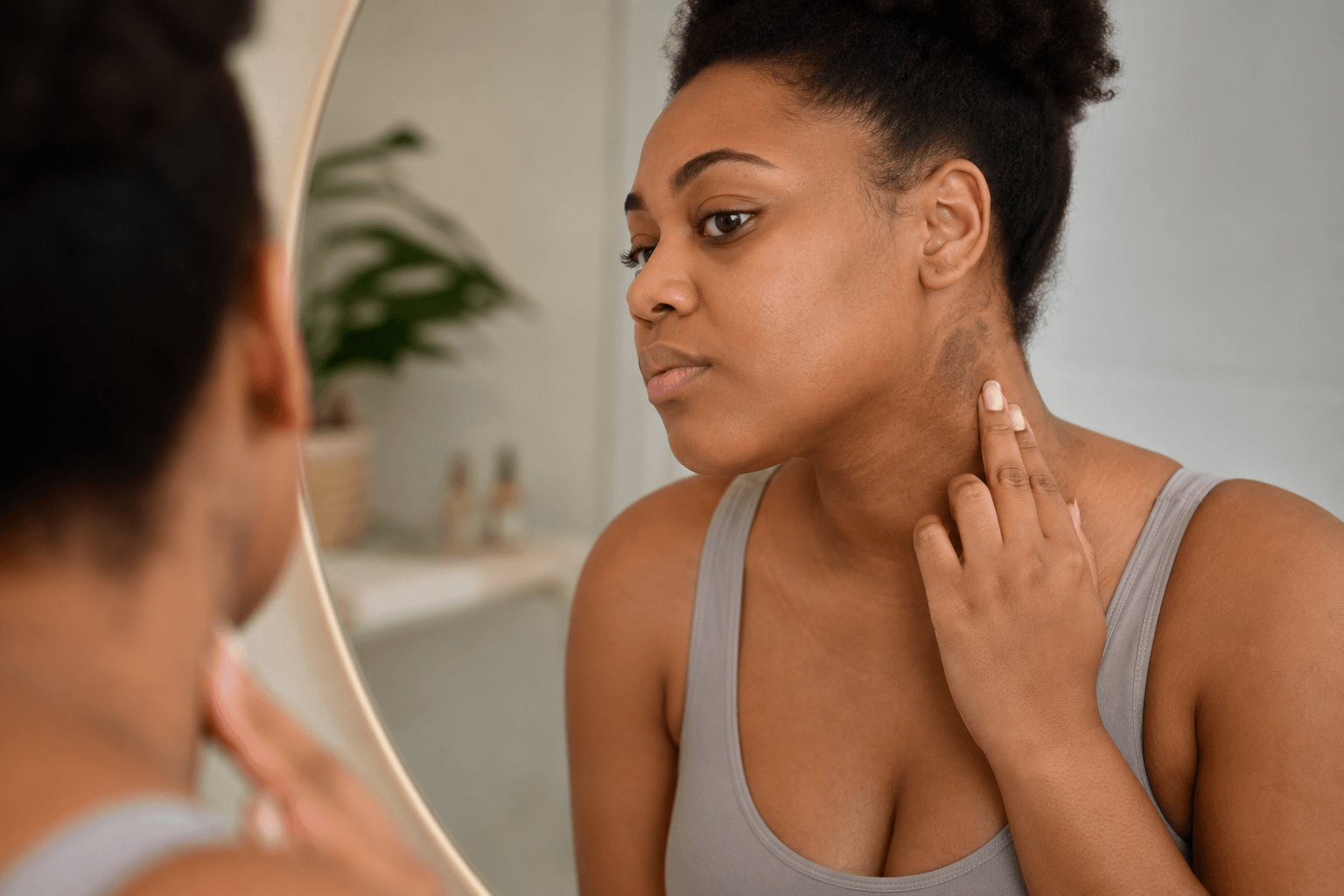
Acanthosis nigricans looks like thick, velvety skin that is darker than the surrounding area. It usually shows up in folds: the back and sides of the neck, the underarms, the groin, under the breasts, and sometimes the inner thighs. It is closely tied to insulin resistance. When insulin runs high, it can push skin cells to multiply faster, and the skin thickens and looks darker.
It isn't harmful on its own, but it is a sign of what's happening inside your body. Many people notice it before they are ever diagnosed with PCOS or prediabetes.
Is it post-inflammatory hyperpigmentation?
Post-inflammatory hyperpigmentation (PIH) is flat. The marks run from tan to deep brown and sit exactly where a pimple, ingrown hair or patch of irritation used to be. With PCOS, extra androgens often mean deep, tender breakouts along the chin, jawline and neck. In melanin-rich skin, each of those breakouts can leave a mark that outlasts the pimple by months.
Could it be melasma?
Melasma shows up as symmetrical brown or gray-brown patches on the cheeks, forehead, nose or upper lip. Hormones and sun are the big triggers. For some people, hormonal birth control, which is often prescribed to manage PCOS, plays a role too. Atlanta's long, bright summers don't help.
Are your dark spots coming from hair removal?
Excess hair on the chin, upper lip and neck is one of the most frustrating parts of PCOS. Daily shaving, plucking and waxing irritate the follicles, which leads to ingrown hairs, razor bumps and, eventually, dark marks.
Why Do Dark Spots Linger Longer on Melanin-Rich Skin?
Deeper skin tones have more active pigment cells, and those cells react quickly to inflammation of any kind. A breakout, a scrub that's too rough, a strong at-home acid or a treatment that's too aggressive can all tell the skin to make more pigment.
So the goal is never to attack dark patches. It's to calm the skin, treat it at a pace it can tolerate, and protect it from the sun every single day. Harsh creams that promise quick results, DIY lemon or baking soda remedies, and heavy scrubbing often leave things darker than before.
Can PCOS Dark Patches Fade on Their Own?
It depends on the type:
- Acanthosis nigricans often softens when the underlying insulin resistance is managed with medical care. Skin treatments alone don't address what's driving it.
- PIH can fade slowly over many months, but new breakouts keep adding fresh marks. That's why it can feel like nothing ever clears.
- Melasma tends to stick around. It can be improved and managed, but it's prone to coming back with sun and hormonal shifts.
When Should You See a Doctor About Dark Patches?
Book a visit with your physician or a dermatologist if your patches are thick and velvety, appeared suddenly, are spreading, or come with other changes like skin tags, irregular periods, increased thirst or unexplained weight changes. Simple bloodwork can check for insulin resistance, and getting PCOS properly managed helps your skin, your hormones and your long-term health.
Professional skin care works best alongside that medical support, not in place of it.
Which Professional Treatments Help PCOS-Related Dark Spots on the Face?
For PCOS marks on the face, there are several solid options, all available at Skin So Bare Laser Center.
Can Aerolase NeoElite fade PIH and melasma?
Aerolase NeoElite skin treatments use a non-contact 1064 nm laser that is FDA-cleared and suitable for all skin tones. It is used for post-inflammatory hyperpigmentation, melasma, brown spots and active acne, usually with little to no downtime. A series is typically recommended, so changes build gradually.
Where do VI Chemical Peels fit in?
VI Chemical Peels target dark spots, uneven tone and rough texture. When they're customized, they're suitable for medium to deep skin tones. Expect several days of peeling, and don't panic if some spots look darker before they flake away. Peels are usually repeated every few months.
Can a laser facial stop new marks from forming?
Fading old marks while new breakouts keep appearing is an uphill battle. The laser facial helps clear breakouts, including hormonal ones, refines texture and pores, and has no downtime. Many clients book it monthly.
Does laser hair removal help with dark marks?
Yes, indirectly. Laser hair removal reduces PCOS-related hair growth over a series of sessions, which means less shaving, fewer ingrown hairs and fewer dark marks from irritation. It's one of the most practical ways to break the shave, bump, mark cycle on the chin, neck and underarms.
How Does Skin So Bare Approach PCOS Skin in Atlanta?
Skin So Bare is led by Stephanie, a licensed esthetician and laser technician who focuses on skin of color and sensitive skin. Your consultation starts by working out which kind of dark patch you're actually dealing with. Velvety patches in skin folds are something she'll encourage you to bring to your doctor. Facial PIH, melasma and shaving marks are where in-studio treatment can really help.
From there, plans are built conservatively, with settings and pacing chosen for your skin tone and how reactive your skin is. A structured program is another option. The Even Tone Protocol in the Signature Skin Programs typically involves 6 to 12 Aerolase treatments and may include peels. The Clarity Reset focuses on acne. You can read more about how PCOS affects the skin on the PCOS concerns page and the brown spots and hyperpigmentation page.
The studio is in Studioplex on Auburn Avenue in the Old Fourth Ward, an easy trip for clients coming from Midtown, Inman Park, Downtown and Decatur.
What Can You Expect From Treatment?
- Gradual change. Pigment that built up over months or years fades over a series of visits, not in one session.
- Little disruption. Aerolase and laser facials involve little to no downtime. Peels involve a few days of flaking.
- Daily sunscreen. This one isn't optional, especially under Georgia sun. It protects your progress.
- Ongoing care. With PCOS, hormones keep doing their thing, so maintenance visits and a steady home routine help keep results.
Your Skin Is Dropping Hints, Not Handing Down Verdicts
Dark patches are your skin's way of pointing at something, whether that's insulin resistance, hormonal breakouts, or a razor that's been working overtime. Once you know which message you're getting, the next step gets much clearer. Bring the medical clues to your doctor, and bring the facial marks and stubborn shaving spots to a team that treats melanin-rich skin with care. When you're ready, book a consultation and get a plan built for your skin.
FAQs
Can PCOS cause dark skin patches even if my skincare routine is good?
Yes. Insulin resistance and hormonal breakouts happen beneath the surface, so even a great routine can't fully prevent PCOS-related dark patches. Medical care for the underlying cause, plus targeted professional treatment for facial marks, usually works better than products alone.
How do I know if my dark patches are acanthosis nigricans?
Acanthosis nigricans usually feels thick or velvety and shows up in folds like the neck, underarms or groin. Flat marks where pimples or ingrown hairs used to be are more likely post-inflammatory hyperpigmentation. A physician or dermatologist can confirm the cause.
What is the best treatment for PCOS dark spots on the face in Atlanta?
It depends on whether you're dealing with PIH, melasma or both. Aerolase NeoElite, VI Chemical Peels and structured programs like the Even Tone Protocol are common choices at Skin So Bare, with laser facials helping to control the breakouts that create new marks.
Are these treatments safe for dark skin?
When they're customized, yes. Aerolase is designed for all skin tones, and VI Peels can be adjusted for medium to deep skin. The key is a provider who works conservatively with melanin-rich skin to avoid triggering more pigment.
Will my dark spots come back?
They can, especially if breakouts, sun exposure or hormonal shifts continue. Daily sunscreen, a gentle home routine, managing PCOS with your doctor and occasional maintenance treatments all help keep your tone even.
Can laser hair removal help dark marks on my chin or underarms?
It helps by removing a common trigger. Less shaving and plucking means fewer ingrown hairs and less irritation, so fewer new dark marks form over time.